NightJar.Gift
ENSK

NightJar / The Bird

Shape, wood and CNC

A perching nightjar, carved in two halves.

The body is a stylised nightjar: flat-headed, long-tailed, sitting low along its branch. It is split down the middle so that every cavity can be cut from the seam, then glued around the electronics.

Specifications

313 millimetres of spruce.

The numbers below come straight from the script that turns the sculpted model into the CNC files. Change a parameter or the beam, rerun it, and the walls, pockets and fit checks are recomputed.

Prototype. Nothing has been machined yet. These are design figures from the model, not measurements of a finished bird.

Bird, overall313 x 113 x 100 mm (L x W x H), about 1.2x life size
Each half313 x 100 x 56.7 mm, machined split-face down
Blank per half333.3 x 120 x 60 mm, cut from a planed 60 x 120 mm spruce beam
Thinnest wall6.8 mm at the speaker grille; every other pocket 9.9 mm or more
JoineryFour 8 x 30 mm beech dowels, glued into one half only; the board is held by up to five M2 screws
InsidePockets for the 89.4 x 27.9 mm board v16FULL (XIAO ESP32-S3 and I2S amplifier on it), the cell, the speaker and an INMP441 microphone, with 1.5 to 7 mm of air round the parts
BatteryLiPo 503035, 3.7 V, 500 mAh, standing on edge in the right half
ChargingUSB-C through the left flank, straight into the XIAO; about 100 mA
Speaker8 ohm, 0.5 W, 40 mm, behind a 19-hole grille in the left flank
StandbyNothing powered between presses; only cell protection and charger leakage

3D model

Drag it. Spin it. Look for the seam.

The button on the back is its own part, in a darker wood.

Loading the carving…

Drag to turn · scroll to zoom

Wireframes

Inside the carving.

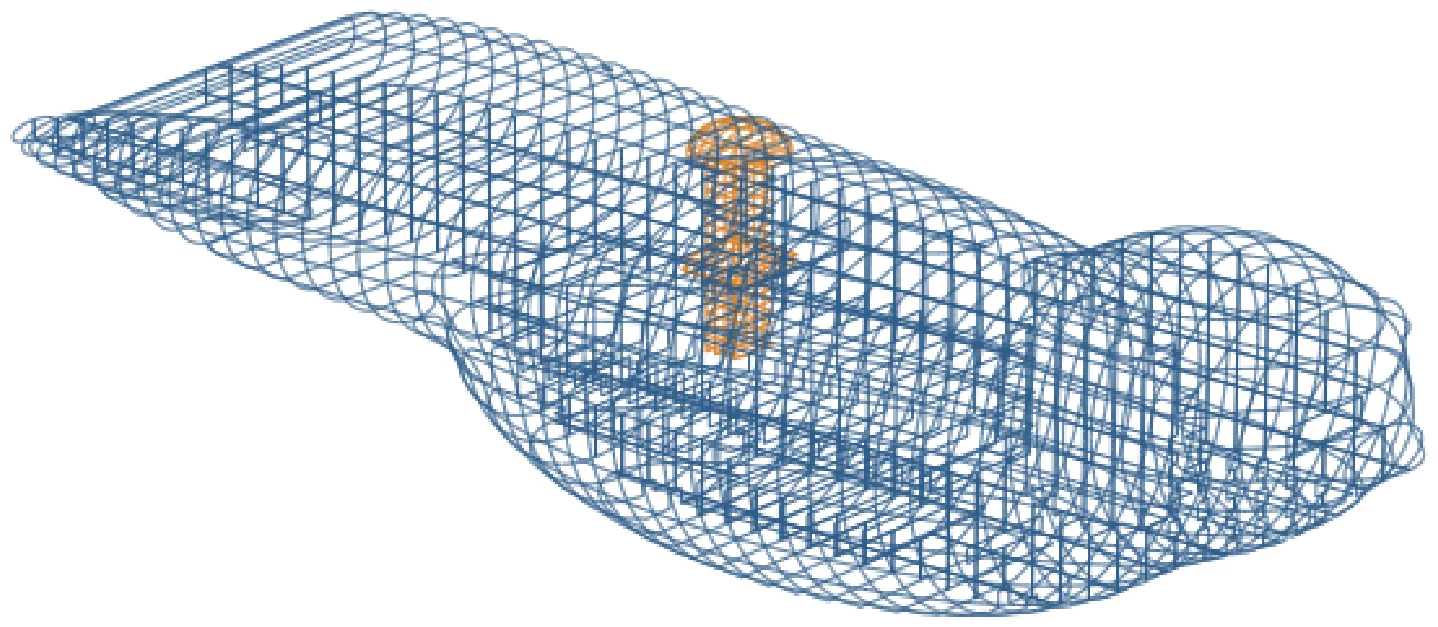
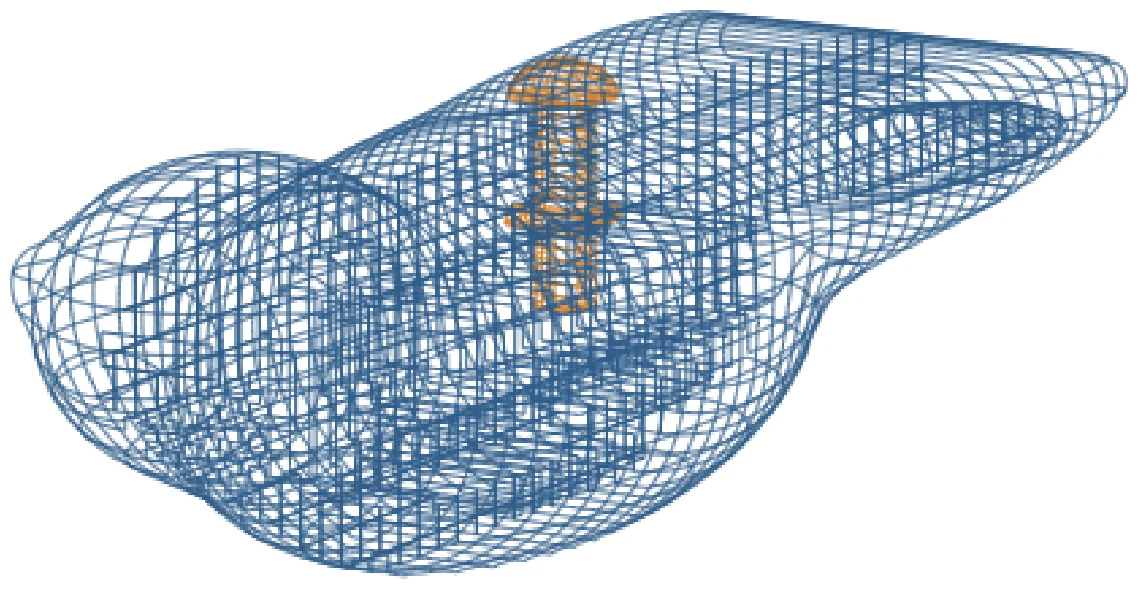
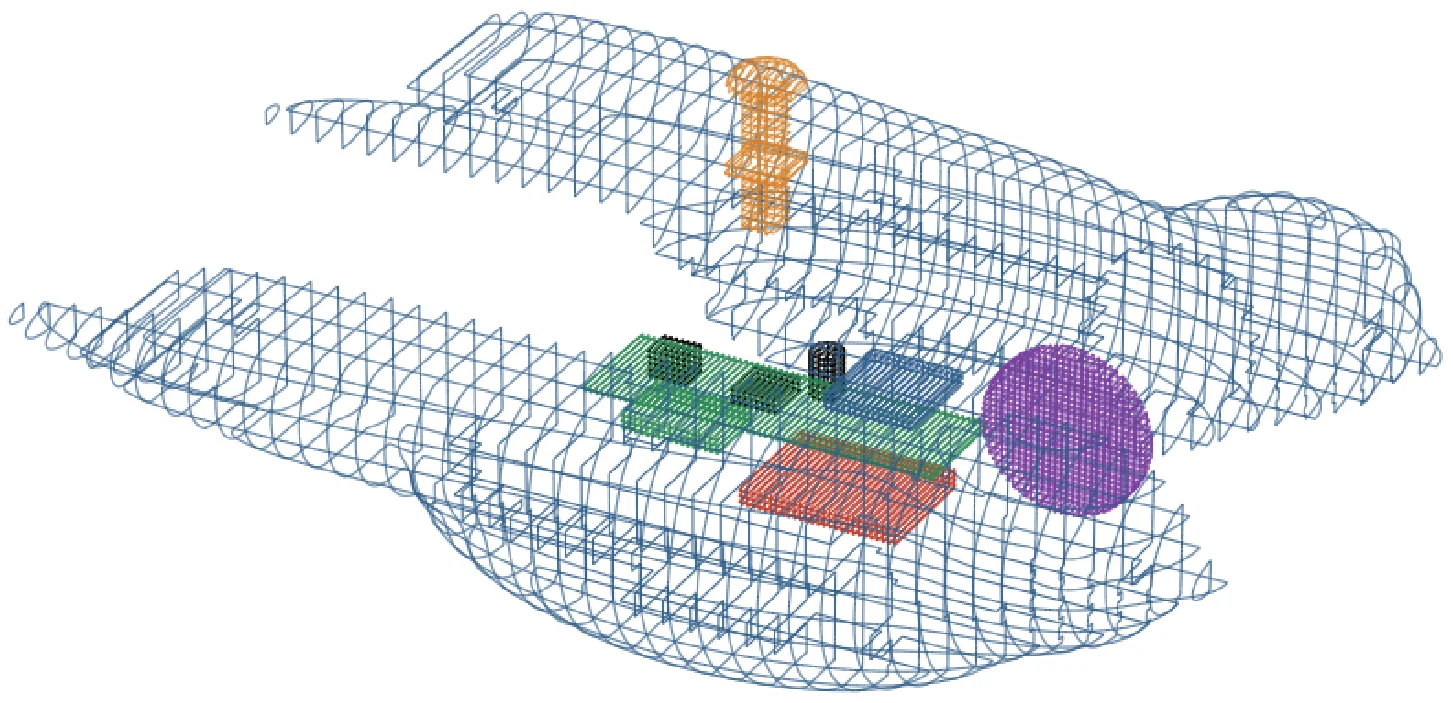
Drawn from the same STL files as the 3D view, as stacks of cross-sections. Blue is the wood, orange is the button, and in the exploded view the electronics sit between the halves.

Wireframe of the assembled bird with the orange button on its back
Assembled. The button in orange, the two halves in blue; the pockets show through the wood.
Wireframe of the bird seen from its right side, tail to the right
From the other side. The board bay and the button channel line up under the button, on the seam.
Exploded wireframe: both halves pulled apart, the button lifted, the electronics between them
Exploded. The halves pulled apart and the button lifted. Between them: the board (green) with the XIAO ESP32-S3 (blue, at the tail end) and the amplifier (violet), LiPo (red), speaker (purple) and microphone (blue, in the head).

Pockets and depths

Every cavity is a flat-bottomed step.

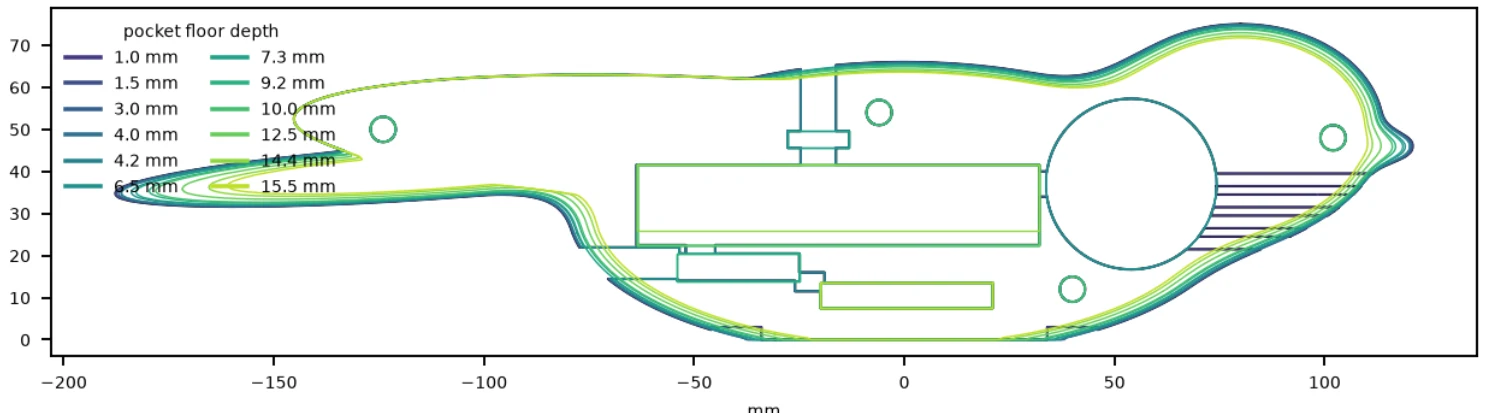
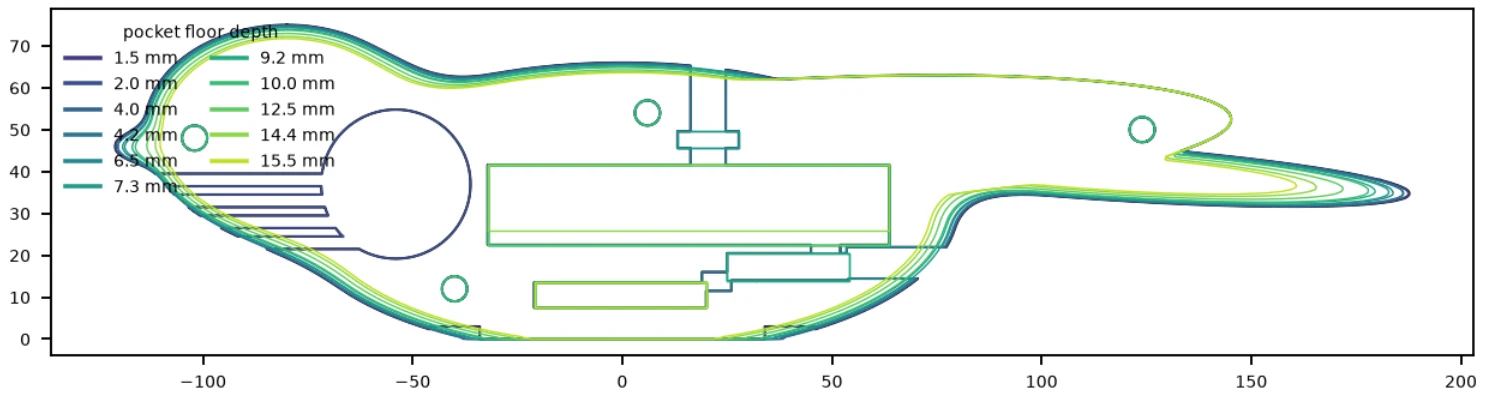
Looking straight at each half's split face, every pocket labelled with its depth. All of them are cut with an 8 mm end mill, which leaves 4 mm inside corners, before the half is flipped and the outside is carved.

The left half's split face with every pocket labelled with its depth, bill to the right
Left half, split face, bill to the right. The speaker pocket (41.4 mm) with its 19-hole grille.
The right half's split face with every pocket labelled with its depth, bill to the right
Right half, split face, bill to the right. The LiPo stands on edge in a 23.5 mm pocket.
PocketHalfDepth from seamNotes
Board bayboth15.47 mm101.4 x 19.6 mm, with 1.5 mm of air at the board edges and 18 mm above it; the board rests on 1.5 mm ledges and is screwed down with M2 screws
Lead wellboth12.47 mm5 mm of air under the board; shallower under the five M2 holes, so the screws have wood to bite into
USB-C portleftthrough13 x 9 mm, straight from the XIAO's USB-C out through the left flank, for charging and programming
LiPoright23.50 mm40 x 36 mm, the cell stands on edge with air round it
Speakerleft41.20 mm42 mm circle, cone outwards behind the grille
Speaker grilleleftthrough19 holes of 3.5 mm, drilled from the speaker floor
Microphoneboth5.00 / 6.00 mm30 x 19 mm in the head for the INMP441; a 3 mm port along the seam opens under the bill
Button channelboth4.20 mm8.4 mm wide, from the board bay up to the back
Pry notchesboth1.50 mmOn the base seam, for opening the bird without damage
Dowel holesboth15.5 mmFour holes of 8.2 mm

Machining

Carved seam-down, then flipped.

Each half is carved from its own 333 mm piece of the beam. The outside has no undercuts, so every point is reachable from above.

  1. Stock. Cut each blank 333.3 mm long from the planed 60 x 120 mm spruce beam, away from finger joints and with few knots in the head and tail. The beam's planed face becomes the seam.
  2. Seam side up. Drill two registration holes through the 10 mm margin. Cut every pocket with an 8 mm end mill, deepest the speaker at 41.2 mm; the USB-C port goes right through the left flank. Drill four 8.2 mm dowel holes 15.5 mm deep, the 19 grille holes (3.5 mm) in the left half, and the microphone groove with a 3 mm ball-nose.
  3. Flip. Turn the blank onto the registration pins. The seam face is now down and flat on the spoilboard.
  4. Outside. Rough leaving 0.5 mm, finish with a 3 mm ball-nose at a 0.2 mm stepover. Spruce tears out: sharp cutters, and a sanding sealer before the last pass. Leave tabs or an onion skin at the seam.
  5. Mirror, but not quite. The right half mirrors the left on the outside, but its pockets differ (speaker left, LiPo right), so each has its own toolpath.
  6. Finish. Cut the tabs and sand. Then red stain, wax and lacquer on the outside, as the CNC operator recommends, never in the pockets, grille holes or microphone port.

The wooden button

A small dome with a square stem.

Turned from hardwood or 3D-printed (PLA, PETG, PVB or a PC carbon-fibre blend), an 18 mm dome sits on an 8 x 8 mm square stem that runs straight down the seam onto the switch. The square section stops it turning.

  • 41.4 mm tall overall; the dome stands 1.5 mm proud of the back.
  • A 14 x 14 x 3 mm collar sits 0.5 mm under the board bay's ceiling, so the button cannot fall out.
  • The stem length assumes the 4.3 mm tall 12 x 12 mm switch.

Closing the bird

Four 8 x 30 mm beech dowels are glued into one half only. The other half's holes hold them snugly but not glued.

To open it again, a thin flat blade goes into one of the pry notches on the base seam and is twisted gently, working the halves apart evenly front and back.

Wood

Spruce, from a planed beam.

OBI and Hornbach sell only softwood in beams this thick; their hardwood comes in thin strips. Planed, kiln-dried spruce (KVH, about 15 % moisture) is on the CNC operator's list of suitable woods, and the bird is sized to fit a 60 x 120 mm beam. Prices were read on 14 October 2026, include VAT and exclude shipping.

Planned

Spruce beam KVH Si 60 x 120 mm, planed, 2.5 m

hornbach.sk · 19.69 EUR per beam (item 7886156)

The chosen wood: kiln-dried, planed on all four sides, visible grade. It gives seven 333 mm blanks, the halves for three birds and a spare, about 6.56 EUR per bird. The bird is sized to the beam.

View at hornbach.sk

Alternative

The same beam, 4 m

hornbach.sk · 31.36 EUR per beam (item 7886160)

Eleven blanks: five birds and a spare half, about 6.27 EUR per bird.

View at hornbach.sk

KVH can be finger-jointed: cut the blanks from stretches without a joint. The beam is about ±1 mm, so measure it before setting up the CNC.